Resources
RSS-
The evolution of calligraphy learning over the past three decades highlights the shift from traditional library and class-based methods to the more accessible online resources, allowing learners to choose between the detailed foundations of Traditional Calligraphy and the creative flexibility of Modern Calligraphy.Read now -
Who is the Father of Calligraphy?
Read nowEdward Johnston (1872-1944) played a pivotal role in reviving calligraphy at the end of the 19th century, breathing new life into this ancient art form.
His influential work laid down the foundations of modern calligraphy, covering the principles of writing, the anatomy of letters, and the tools required for the craft.
-
What is Calligraphy?
Read nowWriting has a long history reflecting civilizations, from the earliest cave paintings to Egyptian hieroglyphs, and eventually to our alphabet, a Roman adaptation of the Greek alphabet. The Roman period was a major landmark in the development of the letterforms...
-
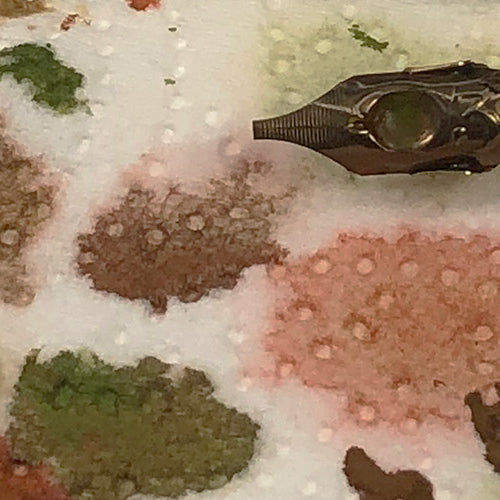
Dye-based and Pigmented Inks
Understanding the differences between dye-based inks and pigmented inks, and when to use each.Read now -
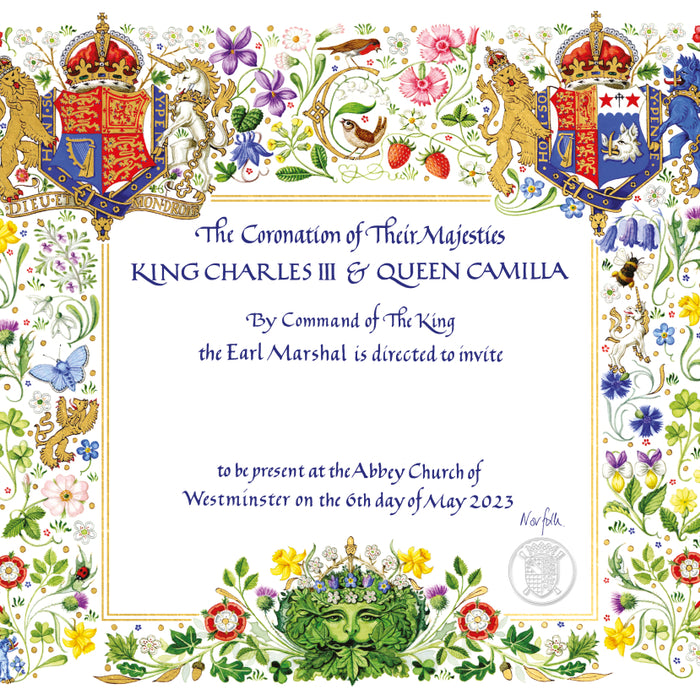
An Interview Andrew Jamieson, the designer of King Charles III's Coronation Invitation
Read nowThe invitation for the Coronation has been designed by Andrew Jamieson, a heraldic artist and manuscript illuminator. He is a Brother of the Art Workers’ Guild, of which The King is an Honorary Member. Recently, I contacted Andrew Jamieson, and...
-
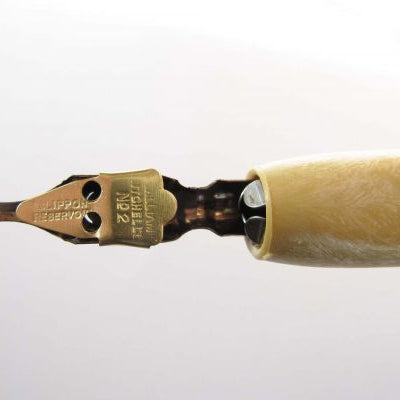
Fitting a Reservoir
Read nowThere are two types of nibs: pointed and broad-edge. Pointed nibs do not use a reservoir, but broad-edge nibs do. Some broad-edge nibs are purchased with a reservoir. These include Brause Bandzug nibs, Speedball ‘C’ and ‘LC’ nibs and Leonardt...
-
3 Tips on cleaning nibs
Read nowTo ensure reliable ink flow, it is important to keep your calligraphy pen clean. Dip pens and nibs should be cleaned after each use. The easiest way to clean your nib is to simply rinse the pen in slow running cold...
-
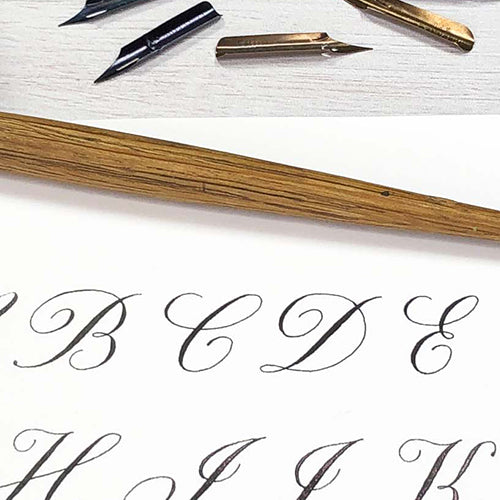
What is Copperplate Writing?
Read nowFor many years the hand which we know today as ‘Copperplate’ was called ‘Roundhand’. Unfortunately that name is now sometimes used by calligraphers as an alternative for the ‘Foundational Hand’ first developed and popularised by Edward Johnston. The style is...
-
How to Rule-Up
Read nowDoes anybody like ruling-up? Not many people do, but these tips will help make light work of this important activity. Accuracy is most important Time taken to accurately rule up will save a great deal of frustration later on. Ruling...